

De La Rue Playing Cards. Designs by Owen Jones
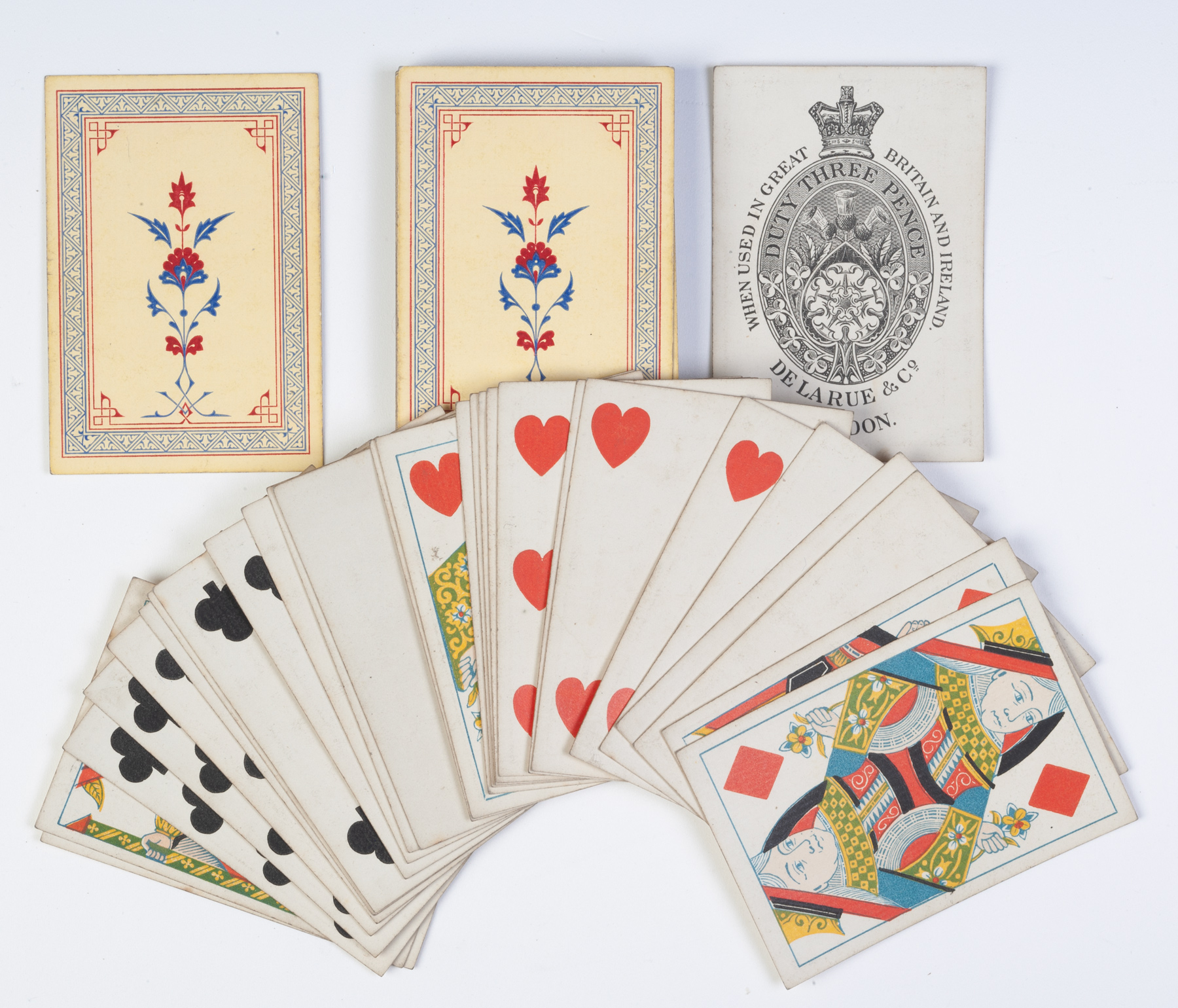
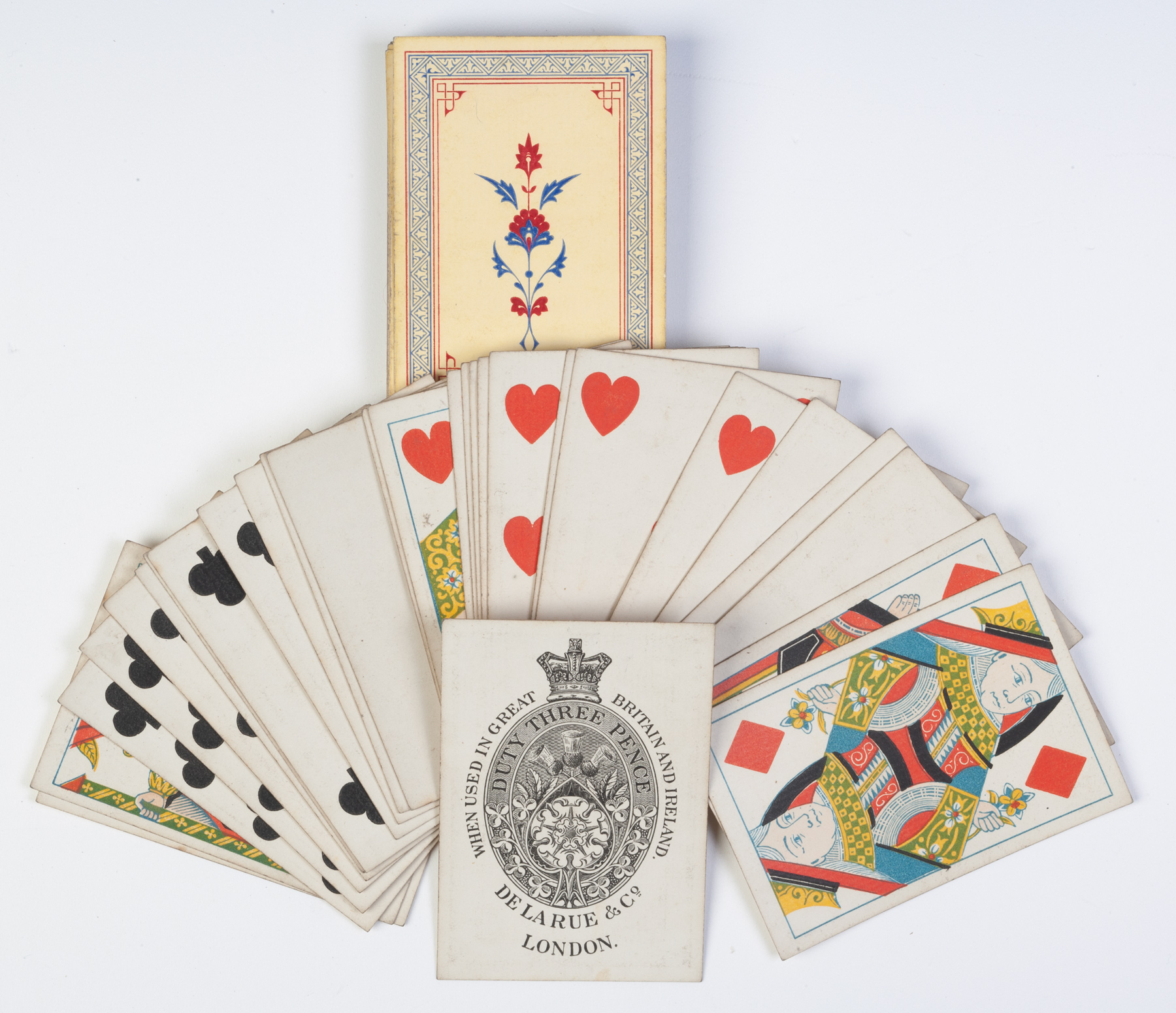
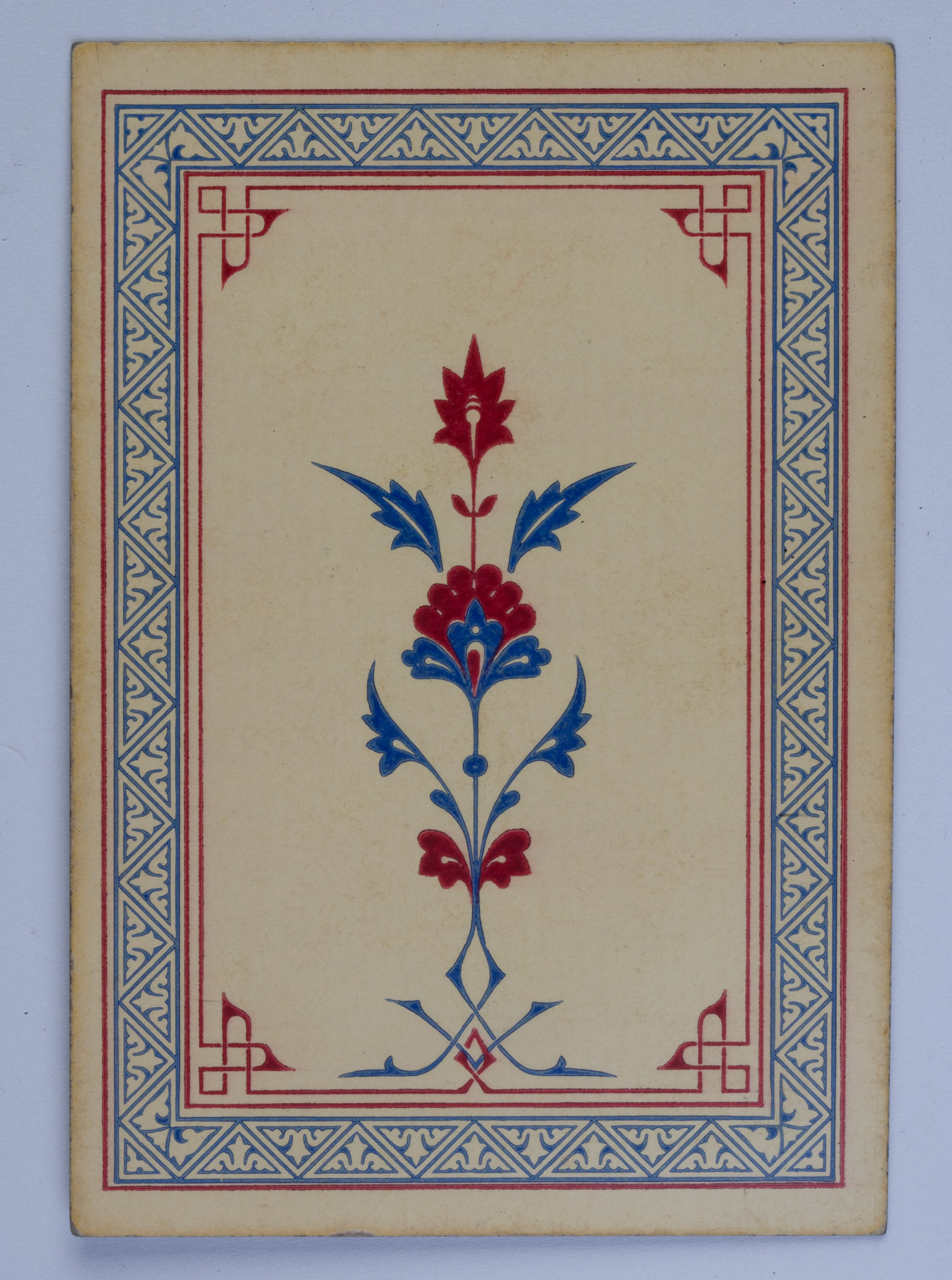
A full deck of playing cards produced by Thomas De Rue, the backs designed by Owen Jones. (1809-1874).
The history of the relationship between Thomas De La Rue, recognised as the inventor of the modern English playing card, and Owen Jones, known for his chromo-lithographic masterpiece, Grammar of Ornament, began in 1844 at the time De La Rue was determined to have the world’s best artists working for him, producing designs for the backs of his playing cards.
Over 20 years, Jones created 173 different designs from Aesthetic styled fruit and flowers to Chinoiserie to arabesque.
Jones played a significant role in three generations of the De La Rue family, culminating in that with Warren’s son, the eccentric Warren William, who was taught the finer secrets of lithography by Jones.
Owen Jones’ Plans, Sections, Elevations and Details of the Alhambra was a landmark work, a collaboration between Jones and the French architect, Jules Goury. It was over a decade in the making before final publication in 1845, Jones spending much of the time developing the technique of lithography and was in time considered a pioneer of the new technique.
Jones went on to become Superintendent of Works for the 1851 Crystal Palace Exhibition and took an active part in the decoration and arrangement of the palace.
He was one of a circle of artists who were friends with Henry Cole who was aiming for higher standards in the Art Manufactures and whose ideas were, in turn, to have a considerable influence on William Morris.
