



Harrison Telescopic Candlesticks in Paktong
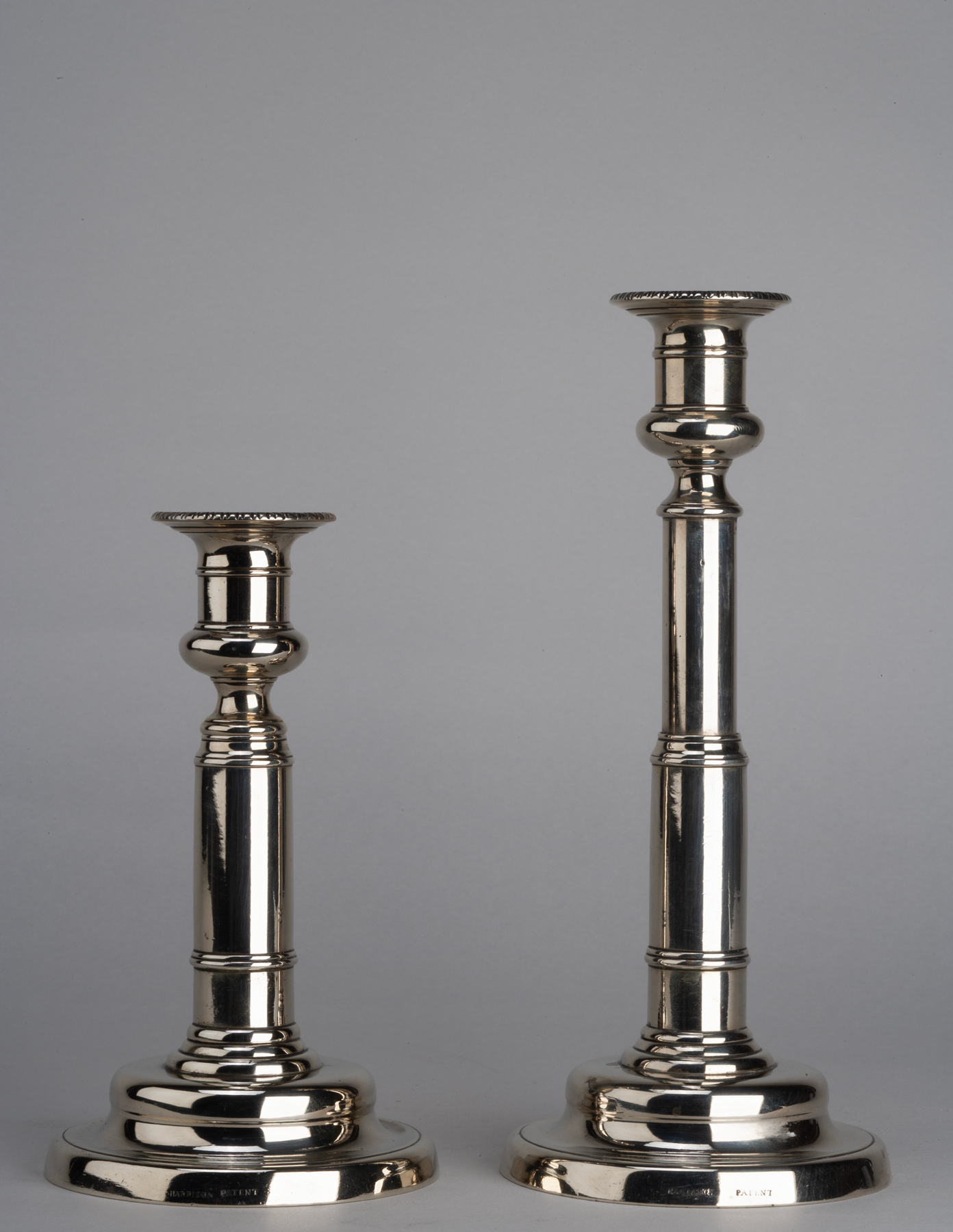
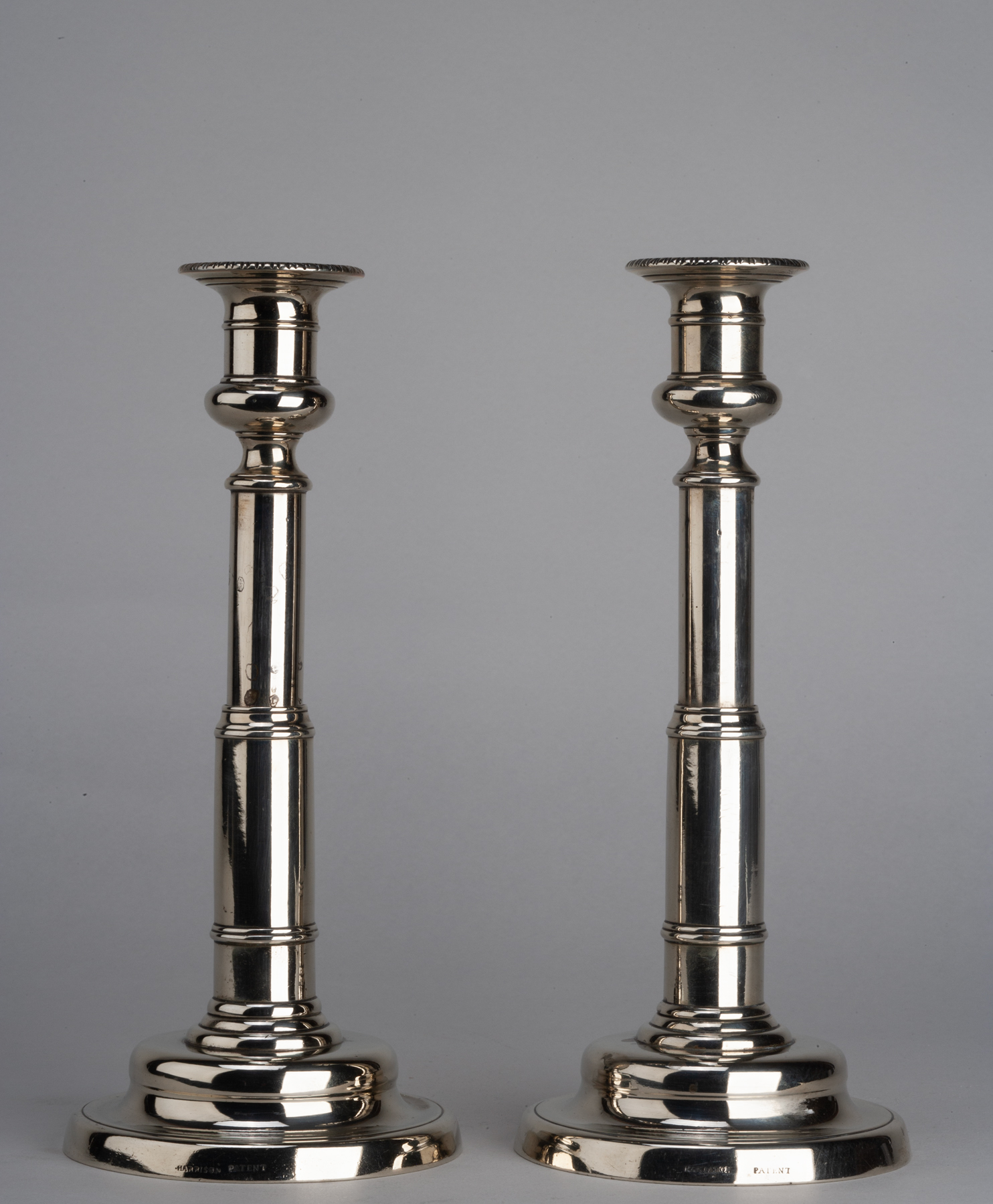
Pair of telescopic candlesticks made using Paktong, Birmingham, sometime around 1800. Stamped around the foot HARRISON PATENT.
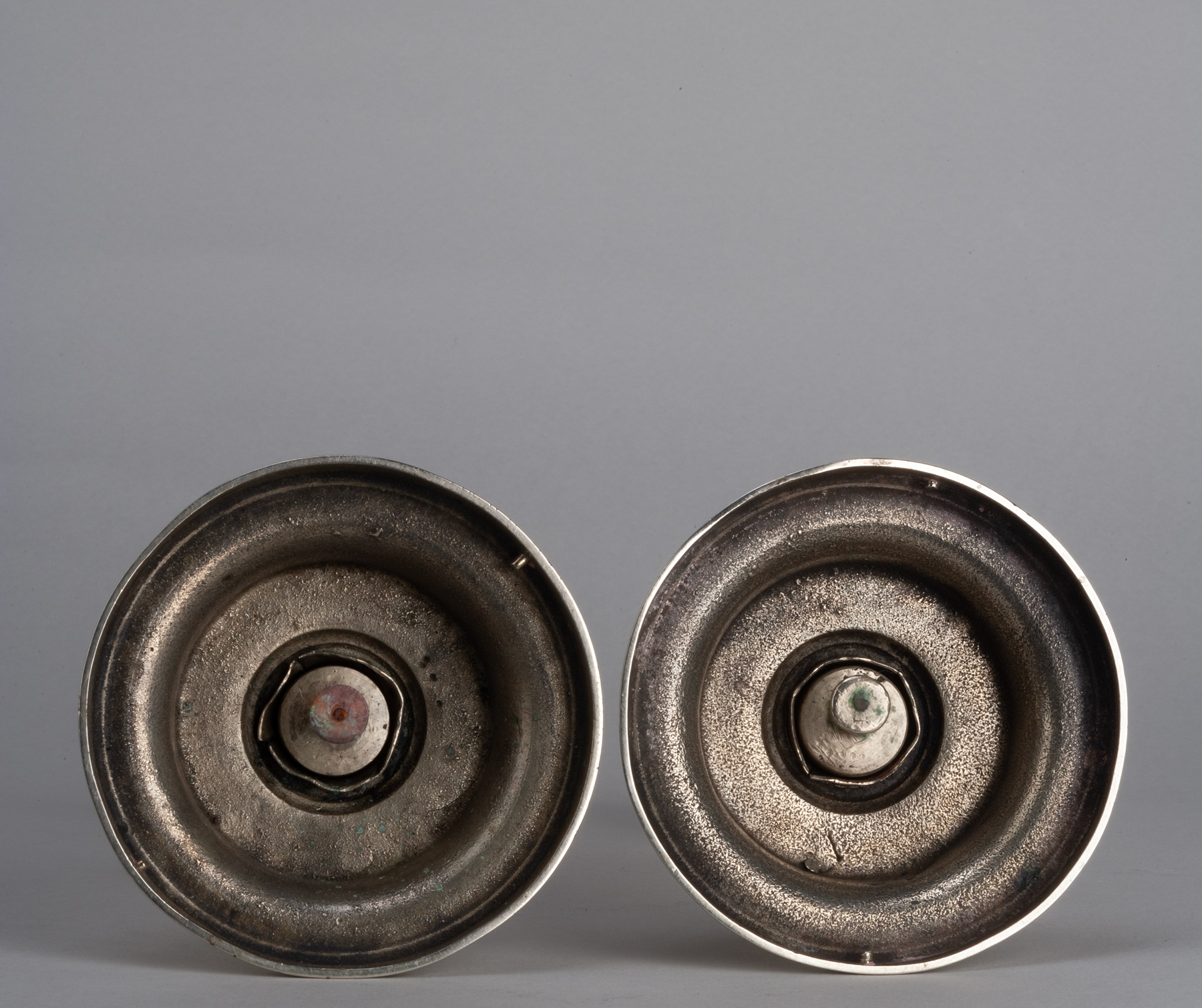
Two stubs of paktong remain on the inside edge of each candlesticks’ foot indicating that these sticks were originally finished with wooden inserts bearing a hole at their centre to allow the use of the push-up ejectors.
dia:4 3/8 in x h:7 1/2-10 inches
Most of what Bishop Watson referred to in 1781 as “white copper from China” was bought from the Far East by the English and other Europeans, its silver like qualities and resistance to tarnish keeping it in such high demand that European metallurgists made a considerable amount of effort to produce their own ‘tutenag’ or ‘paktong’. It was not until the very beginning of the 19th century that they succeeded in their quest on anything like an industrial level. The alloy these candlesticks are made from, being from the Birmingham workshop of Harrison, is very likely to be an eighteenth century “imitation” of paktong “differing in some qualities from those which are bought from Asia, but resembling them in so many other that they have acquired their name”.
Harrison was a pioneering metalworker with several patents bearing his name, these being testimony to his quest to stay in competition with the likes of Matthew Boulton and James Fothergill and it seems only likely that he would have been experimenting with making his own ‘white copper’.
