

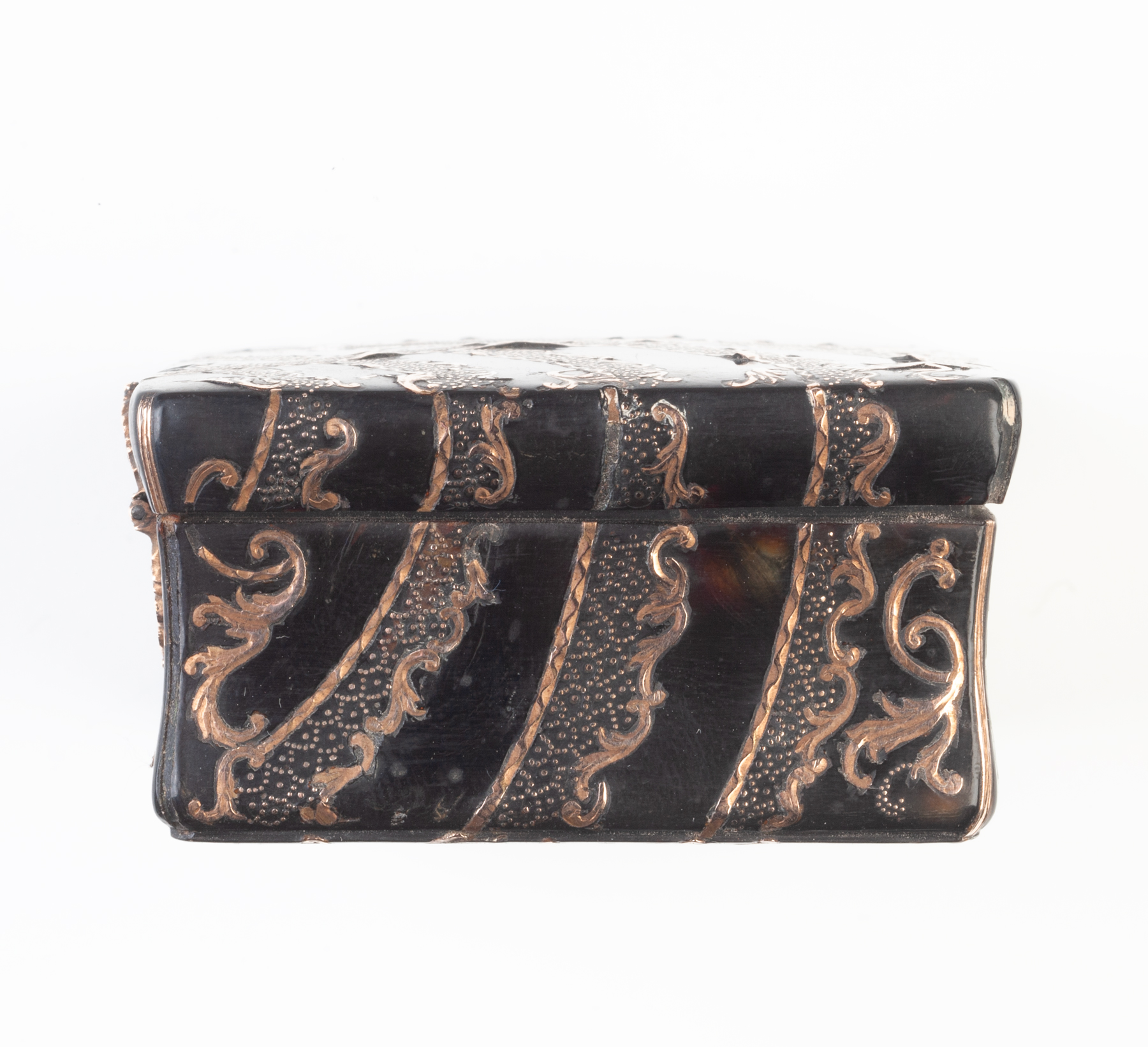
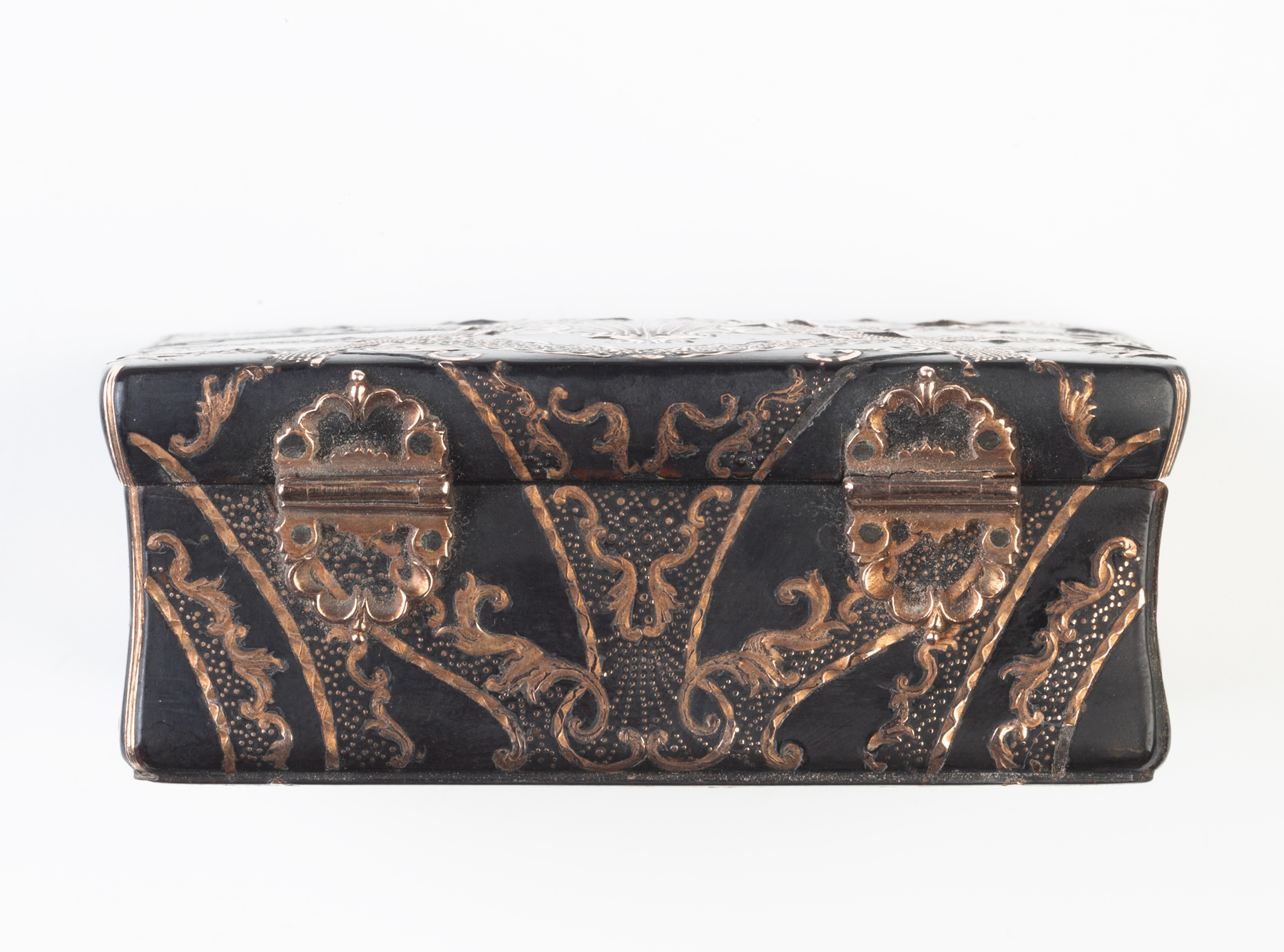
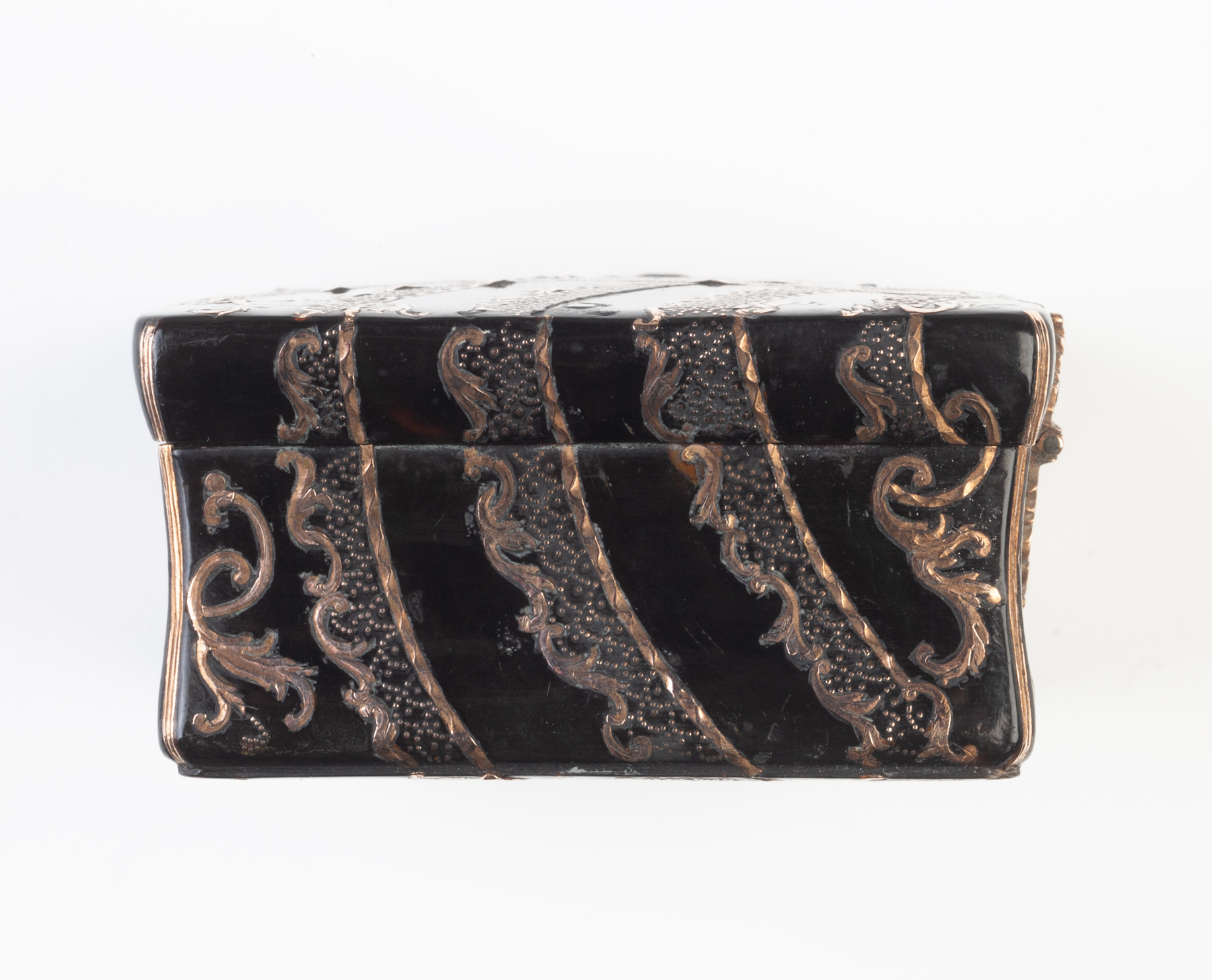
Italian Tortoiseshell & Gold Piqué Box
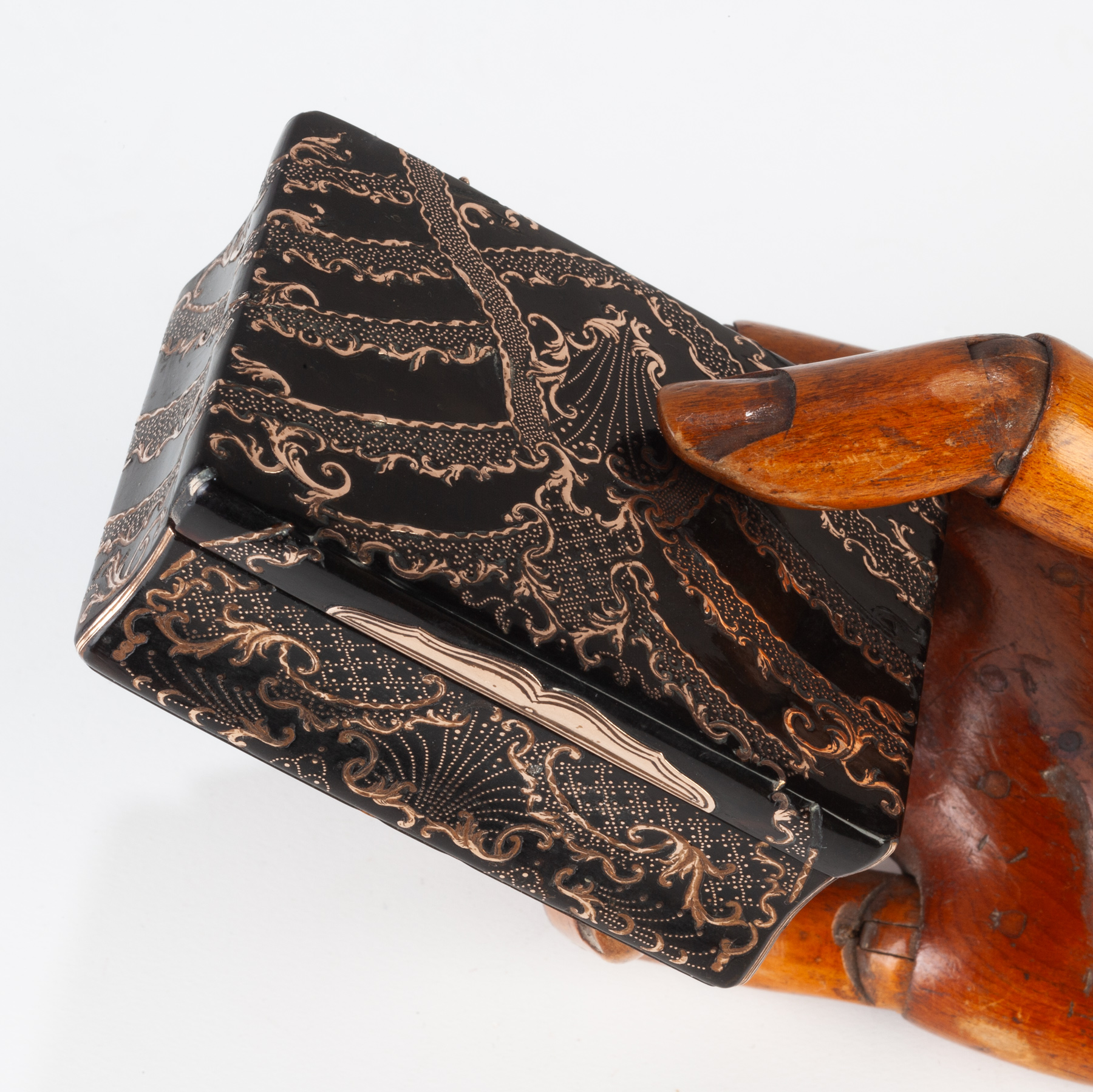
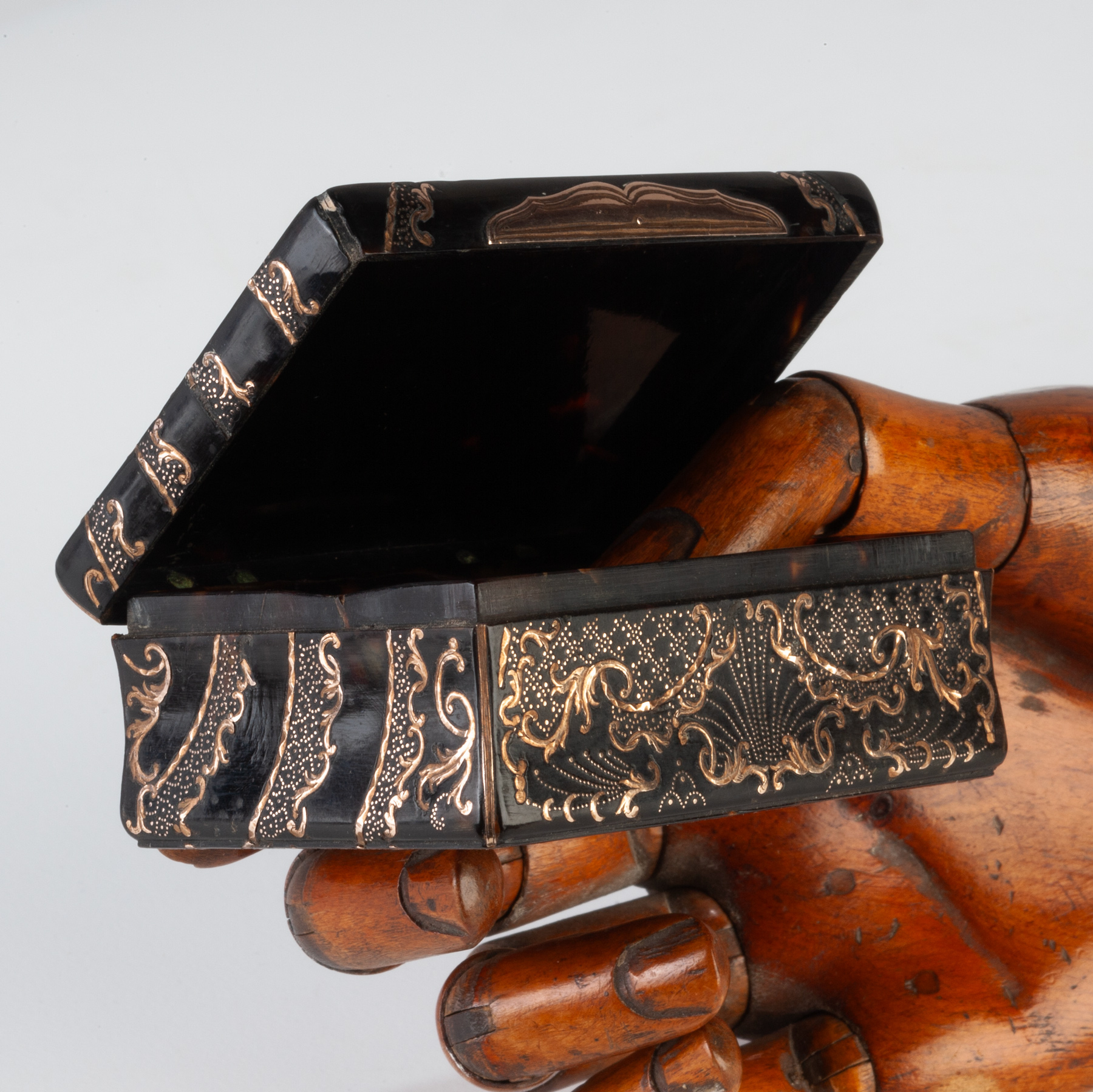
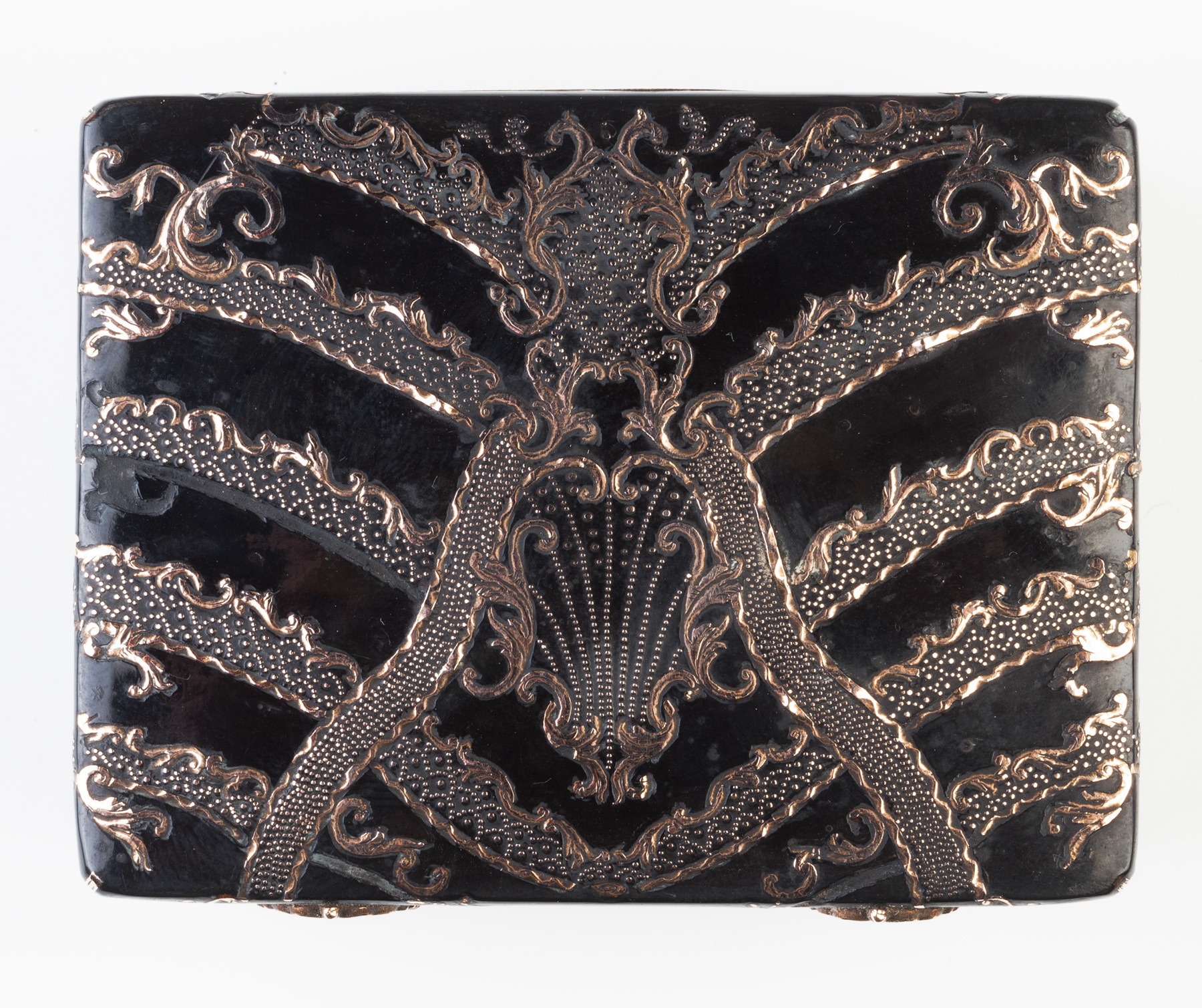
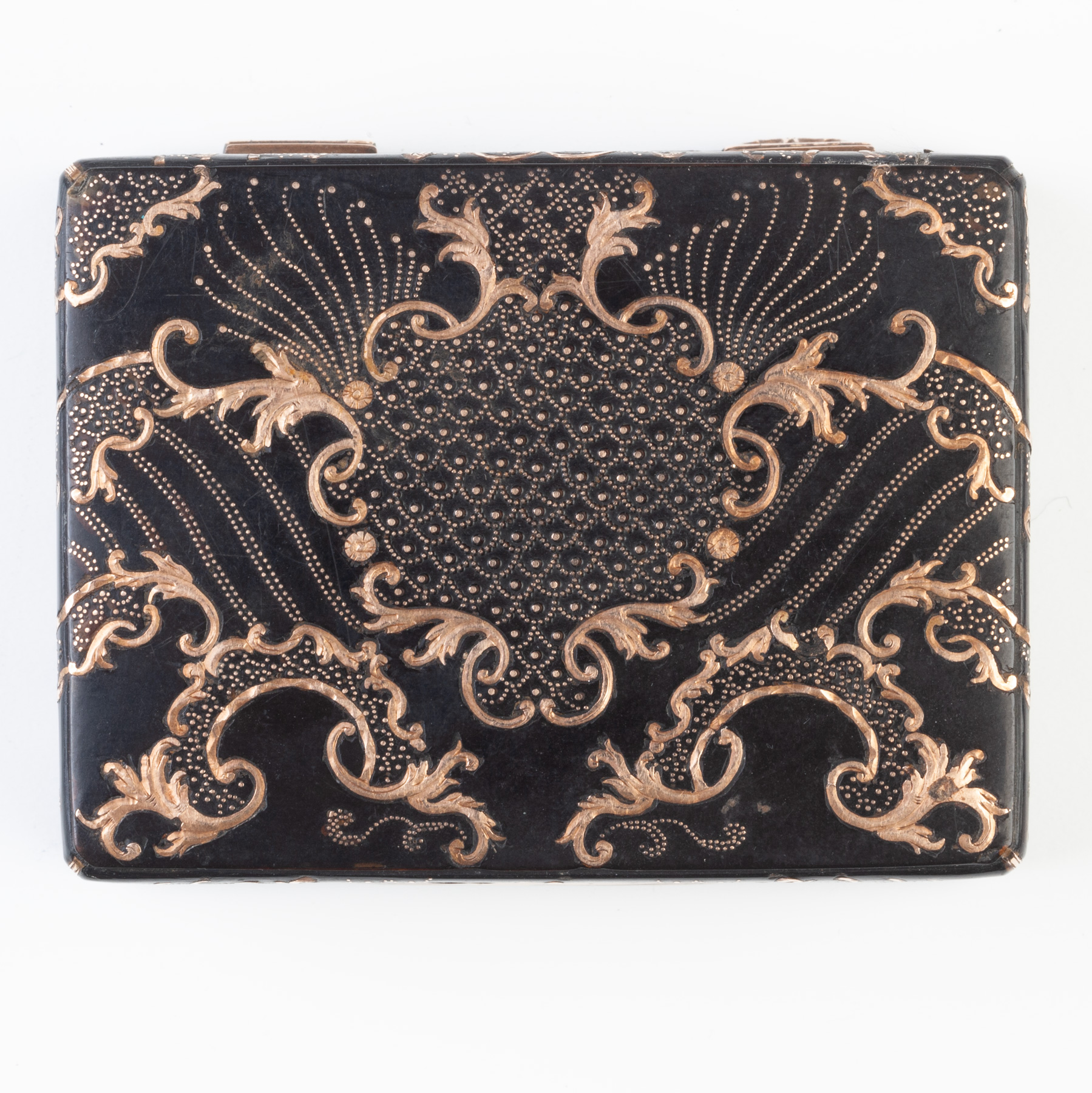
From Naples, early to mid eighteenth century. The thick tortoiseshell made into a large pocket box with waisted sides and gently raised, hinged lid, inlaid on all sides, including the base, with a fabric like rocaille pattern of cut and engraved gold with piqué pins of various sizes, the work of the Neapolitan tartarugari.
Naples circa 1740.
w:3.25 in x d:2.5 in x h:1.25 in
At the beginning of the eighteenth century the tartartuguri of Naples perfected the techniques of working with tortoiseshell, mother-o-pearl and gold to produce the most beautiful and extravagant of objects ranging from small boxes such as this and containers for snuff and even to small furniture. An example of such, an exceptional table by Giuseppe Sarao, is held in the Hermitage Museum, St. Petersburg. The best of this piqué work was made for Charles de Bourbon, King of Naples, and given as diplomatic gifts, in particular to the Ottoman sultan, Mahmud I. The designs are often drawn from the pattern books Jean Berain, Paul Decker and Martin Engelbrecht.
